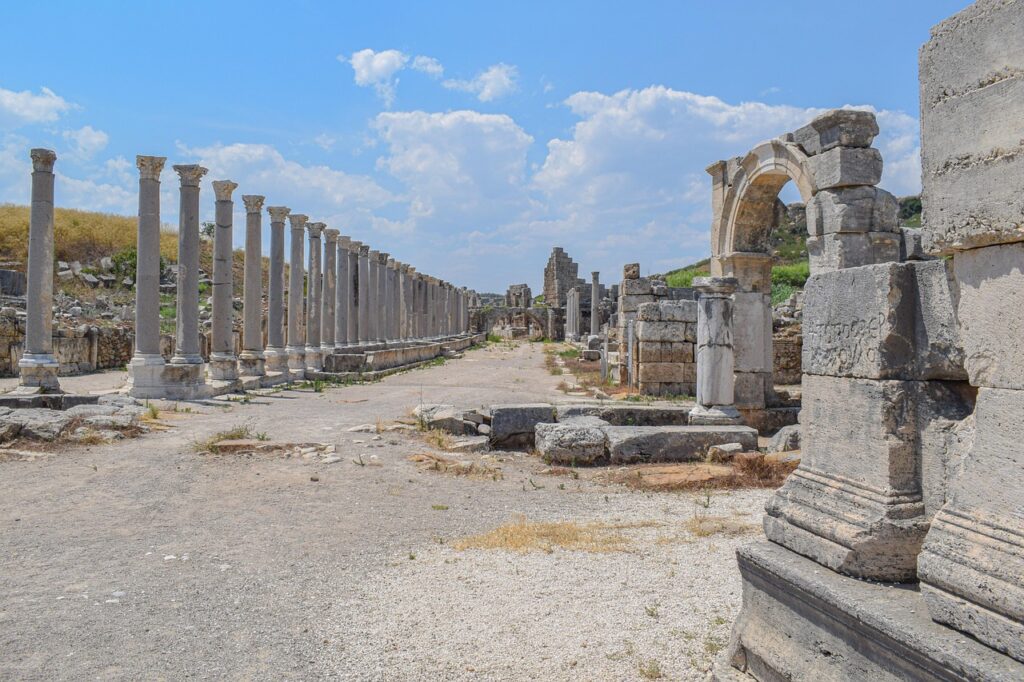
Perge is an ancient town located in Antalya Province, in the Mediterranean region of Turkey. It lies near the modern city of Antalya and is part of the historical Pamphylia region on the southern coast of Turkey. The site is primarily known as an archaeological destination featuring extensive Roman ruins. Perge is situated approximately 17 kilometers east of Antalya along the Turkish Riviera coast.
Perge Overview
Location: 17 km east of Antalya city center
Primary features: Ancient Roman ruins including theater, stadium, and baths
Time needed: 2-4 hours (half day)
Best time to visit: April to October (spring to autumn)
Cost level: Low; entrance fee applies
Tourism profile: Archaeological tourism, cultural heritage visits
Reasons Travelers Visit Perge
Significant archaeological site with extensive Roman-era ruins
Location in Antalya Province near Mediterranean coast
Presence of well-preserved structures including theater, stadium, Roman baths
Educational and cultural value related to ancient Pamphylian history
Accessibility from Antalya city makes for convenient day trips
Best Time to Visit
The optimal visiting period for Perge is from April through October. During these months, the climate is warm and dry, suitable for outdoor exploration of ruins. July and August can be hot with temperatures exceeding 30°C, whereas spring and autumn provide milder weather. Tourist crowd levels peak in summer, especially in July and August, with fewer visitors in spring and autumn.
Season
Months
Weather
Visitor Crowds
Spring
April – June
Mild, 15-25°C, low rainfall
Moderate
Summer
July – September
Hot, 28-35°C, dry
High
Autumn
October
Cooler, 18-25°C, occasional rain
Low
Winter
November – March
Cool, 10-15°C, higher rainfall
Very Low
How to Get There
Perge is accessible from the city center of Antalya by road. The nearest major city is Antalya, which is served by an international airport. Travelers can reach Perge via car, taxi, or local bus from Antalya. The site is approximately a 20-25 minute drive east of Antalya.
Nearest major city: Antalya, 17 km west
Nearest airport: Antalya Airport (AYT)
Transport options: car rental, taxi, local minibuses (dolmuş), private transfers
Approximate travel time from Antalya city center: 20-25 minutes by car
Getting Around
Walking is the primary mode for exploring the archaeological site; site area is walkable
Distances between main ruins are generally under 1 kilometer
Local transport options include taxis and minibus services connecting from Antalya
Car rental available in Antalya for flexible regional travel
Top Attractions in Perge
Roman Theater
A large ancient open-air theater dating to the Roman period, with capacity for around 15,000 spectators. This ruins site is classified as historical and usually requires about 20-30 minutes to visit.
Stadium
A well-preserved Roman stadium used for athletic competitions. It measures 250 meters in length and is a key archaeological structure. Typical visit duration is 15-20 minutes.
City Gates and Walls
Remains of fortification walls and city gates that surrounded the ancient town. The gates show Roman architectural techniques. Visiting these sites takes about 10-15 minutes.
Roman Baths
Ancient Roman thermal baths with notable mosaic floors and heating systems. It is an open-air ruin attraction requiring about 15-20 minutes to explore.
Agora
The central public square used for markets and social activities during Roman times. The ruins include columns and foundations and take approximately 15 minutes to visit.
Common Visitor Activities
Walking tour of Roman ruins including theater, stadium, baths, and agora
Photography of archaeological structures and cityscape views
Educational visits focused on ancient Roman architecture and urban planning
Day trips from Antalya incorporating Perge and nearby ancient sites
Suggested Perge Visit Duration
Most visitors spend between 2 to 4 hours exploring Perge’s archaeological ruins. A half-day visit is generally sufficient to cover major attractions thoroughly. An extended day trip can include additional nearby sites in Antalya Province, though Perge itself does not require more than half a day.
Nearby Destinations
Antalya city center – 17 km, approximately 20-25 minutes by car
Aspendos ancient theater – 35 km east, approximately 40 minutes by car
Side archaeological site – 60 km east, approximately 1 hour by car
Manavgat town and waterfalls – 60 km east, approximately 1 hour by car
Practical Information
Climate
Mediterranean climate with hot, dry summers and mild, wetter winters
Seasonality Notes
Spring to autumn is peak visiting season; winter has less favorable weather and fewer tourists
Crowd Levels
High in summer months (July-August); moderate in spring and autumn; low in winter
Constraints or Limitations
Site is outdoors; little shade; can be hot in summer; limited public transport options from Antalya; entrance fee applies
Frequently Asked Questions
What type of travelers visit Perge?
Perge attracts cultural travelers, history enthusiasts, and educational groups focused on ancient Roman architecture. Visitors typically have interest in archaeology and historical ruins rather than recreational tourism.
How many days are needed to visit Perge?
Most visitors allocate 2 to 4 hours, equivalent to a half-day visit. This timeframe is sufficient to see all major ruins. Full-day itineraries can include nearby archaeological sites in Antalya Province but are not necessary for Perge alone.
Is Perge safe for tourists?
Perge is generally safe for visitors with well-maintained public access paths. Precautions should be taken when walking on uneven archaeological terrain. There are no specific safety risks beyond usual outdoor site visit considerations.
What is the best time to visit Perge?
The best time to visit is between April and October when the weather is dry and warm. Peak crowds are during July and August. Visiting in spring or autumn offers milder temperatures and fewer tourists.
Elena, an Italian cultural historian, visited Turkey to study its rich history and architecture. She spent months exploring Istanbul’s palaces, the ruins of Ephesus, and the heritage sites of Anatolia. Elena writes about history, art, and cultural insights