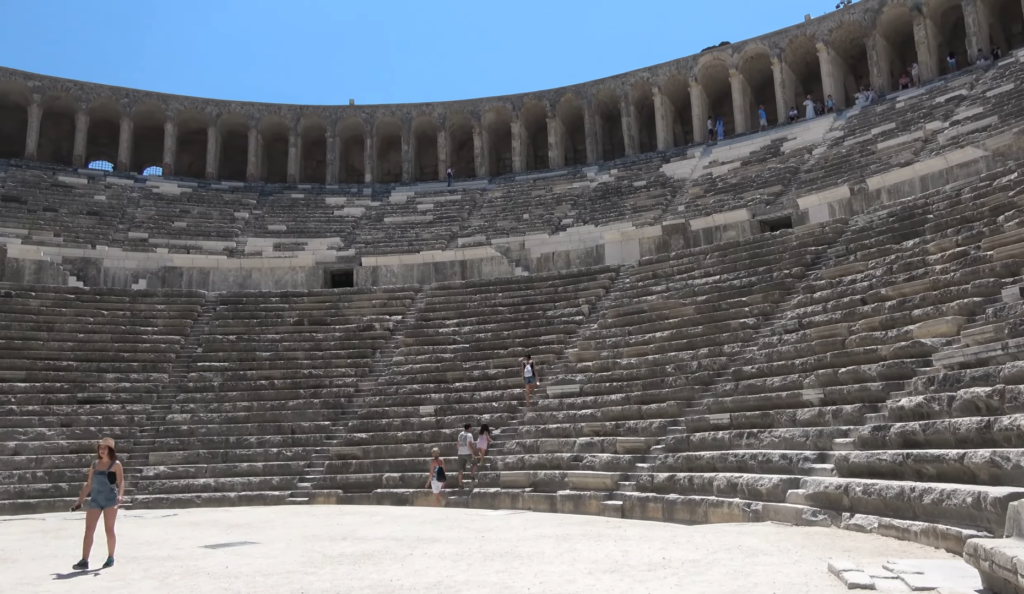
Aspendos is an ancient town located in Antalya Province, in the Mediterranean region of Turkey. It is situated near the modern city of Serik, approximately 50 kilometers east of Antalya along the southern coast. The town is best known for its remarkably preserved Roman theater and archaeological ruins. Aspendos lies in a fertile plain bordered by the Taurus Mountains to the north.
Aspendos Overview
Location: 50 km east of Antalya, Mediterranean region
Primary features: Roman theater ruins, ancient aqueducts, archaeological site
Time needed: 1 day minimum, 1-2 days for comprehensive visit
Best time to visit: April to June and September to October (mild weather)
Cost level: Low to medium, entrance fees apply for ruins
Tourism profile: Cultural and historical tourism
Reasons Travelers Visit Aspendos
Well-preserved Roman theater, one of the best in antiquity
Significant archaeological ruins from the Roman period
Location in a fertile plain with views of Taurus Mountains
Proximity to Antalya and Mediterranean coastline
Historical significance as an ancient Pamphylian city
Best Time to Visit
The optimal months to visit Aspendos are spring (April to June) and autumn (September to October) when temperatures range between 15°C and 30°C. Summers (July and August) are hot, often exceeding 35°C, which may limit outdoor activities. Winters (December to February) are mild but may have occasional rain. Tourist crowds peak in summer and drop considerably in other seasons.
Season
Months
Temperature Range (°C)
Crowd Level
Spring
April – June
15 – 28
Moderate
Summer
July – August
30 – 40+
High
Autumn
September – October
20 – 30
Low to moderate
Winter
December – February
10 – 18
Low
How to Get There
Aspendos is accessible via the nearby city of Antalya, which serves as the primary transportation hub with connections to major Turkish cities and airports. Visitors can reach Aspendos by car, local bus, or organized shuttle services from Antalya, with a travel distance of approximately 50 kilometers.
Nearest major city: Antalya
Access by car or local minibus (dolmuş)
Accessible by bus services from Antalya to Serik and then local transport
Closest airport: Antalya Airport (AYT)
Getting Around
Local transportation options limited; best by private car or taxi
Most attractions within Aspendos site are accessible by foot
Distances between central Aspendos and nearby cities require vehicle
Top Attractions in Aspendos
Aspendos Theater
An ancient Roman theater dating to the 2nd century AD, known for its excellent state of preservation and large seating capacity of approximately 15,000. It is a major archaeological ruin and cultural site. Average visit duration: 1–2 hours.
Aspendos Aqueduct
Remnants of an ancient Roman aqueduct system that supplied water to the city. It consists of stone arches extending several kilometers. The site is an outdoor ruin with walking paths. Average visit duration: 30 minutes to 1 hour.
Aspendos Archaeological Site
Includes the theater, aqueduct, basilica, agora, and city walls among other ruins from the Roman and Hellenistic periods. The site is open-air and covers a wide area. Average visit duration: 2–3 hours.
Common Visitor Activities
Guided or self-guided tours of the Roman theater and other ruins
Photography of archaeological structures
Walking and exploration within the archaeological park
Attend occasional cultural events or performances in the theater (seasonal)
Suggested Aspendos Visit Duration
Aspendos can be explored in a half-day visit focusing mainly on the theater and nearby aqueduct. A full day allows a more comprehensive tour of the archaeological site and nearby ruins. Multi-day visits can include nearby Antalya Province attractions but are not typically required for Aspendos alone.
Manavgat – approximately 35 km east, 40-minute drive
Belek – approximately 20 km southwest, 25-minute drive
Practical Information
Topic
Details
Climate
Mediterranean climate; hot, dry summers; mild, wetter winters
Seasonality Notes
Peak tourism in summer; low crowds in winter; spring and autumn suitable for outdoor activities
Crowd Levels
High in July and August; moderate in spring and autumn; low in winter
Constraints or Limitations
Limited public transport; hot summer weather; archaeological site may have uneven terrain; seasonal closures of theater for events
Frequently Asked Questions
What type of travelers visit Aspendos?
Aspendos mainly attracts cultural and history enthusiasts interested in Roman-era ruins. Visitors often include archaeological researchers, tourists focused on ancient sites, and travelers staying in Antalya looking for day trips. Activities involve exploring ruins and attending cultural events.
How many days are needed to visit Aspendos?
Most visitors spend 1 day to explore the main theater and archaeological site comprehensively. A half-day visit is possible for a quick tour focusing on the theater. Multi-day stays are uncommon unless combined with visits to other Antalya Province destinations.
Is Aspendos safe for visitors?
Aspendos is generally safe for tourists. Standard precautions apply such as staying hydrated and wearing appropriate footwear for uneven surfaces. There are no significant safety concerns related to crime or political issues at the archaeological site.
When is the best time to visit Aspendos?
The best time to visit is during spring (April to June) and autumn (September to October) for moderate temperatures and fewer crowds. Summer months are hot and crowded, while winter is cooler with potential rain but low visitor numbers.
Written by Jamie Henderson
Liam is a travel journalist from Canada who has explored Turkey’s vibrant cities and ancient ruins. He fell in love with the bustling streets of Istanbul and the surreal landscapes of Cappadocia. Liam writes about cultural experiences and hidden gems that travelers often overlook.
PLAN YOUR JOURNEY BY DESTINATION
Get detailed travel guides for Turkiye's most popular regions, including the Mediterranean coast, Cappadocia, Istanbul and more. Each guide is packed with local insights, recommended routes and practical tips to help you explore like a local.