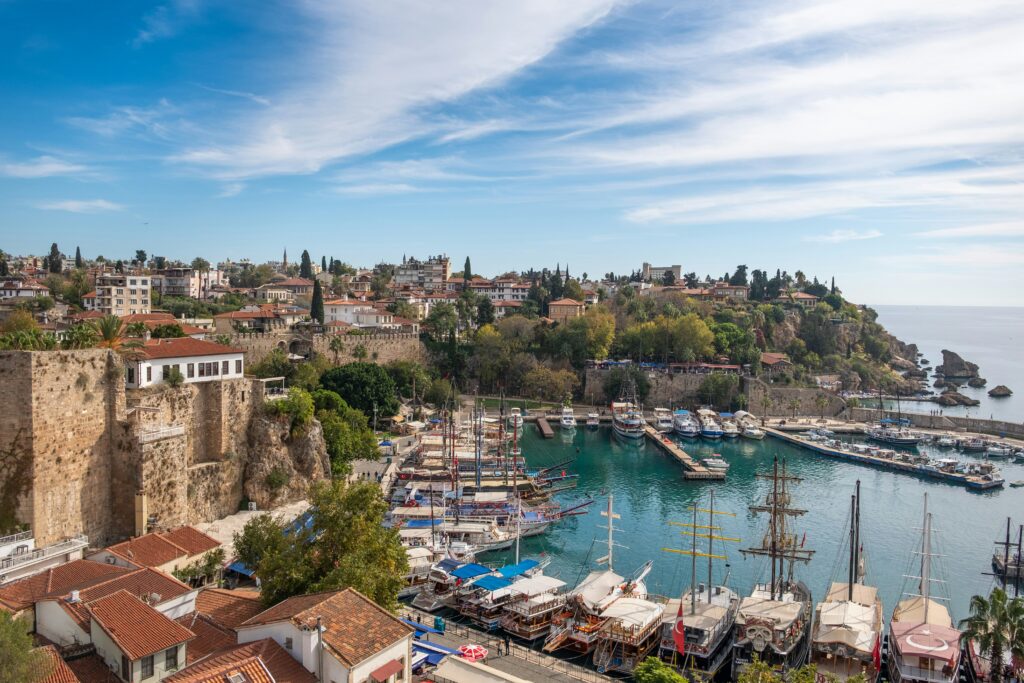
Antalya is a coastal city located in Antalya Province, part of the Mediterranean Region of Turkey. Positioned on the southwestern coast along the Mediterranean Sea, Antalya serves as a major tourism hub due to its combination of historical sites, natural landscapes, and beaches. It is geographically situated south of the Taurus Mountains and is one of the key cities in Turkey’s southern Mediterranean area.
Antalya Overview
Location: Southwestern Turkey on the Mediterranean coast
Primary features: Roman and Ottoman ruins, Mediterranean beaches, Taurus Mountains
Time needed: 2-3 days (minimum 1 day)
Best time to visit: April to June and September to November
Cost level: Low to medium compared to major Turkish cities
Tourism profile: Cultural tourism, beach tourism, historical sightseeing
Reasons Travelers Visit Antalya
Rich historical sites including Roman, Byzantine, and Ottoman eras
Coastal beaches on the Mediterranean Sea suitable for swimming and sunbathing
Access to natural features such as the Taurus Mountains and Düden Waterfalls
Known for Mediterranean cuisine including seafood and traditional Turkish dishes
Strategic location as a gateway between Turkey’s interior and coast
Best Time to Visit
The best times to visit Antalya are during spring (April to June) and autumn (September to November) when temperatures are moderate and rainfall is low. Summers (July and August) experience high temperatures above 30°C and increased tourist crowds. Winters (December to February) are mild but can be rainy. Tourist activity peaks in summer, while shoulder seasons offer fewer crowds.
Season
Months
Typical Weather
Crowd Levels
Spring
Apr – Jun
15-30°C, dry to moderate rainfall
Moderate
Summer
Jul – Aug
30-40°C, mostly dry
High
Autumn
Sep – Nov
20-30°C, decreasing rainfall
Moderate
Winter
Dec – Feb
10-15°C, rainy
Low
How to Get There
Antalya is accessible by air, land, and sea transportation. Antalya Airport connects the city internationally and domestically. Road transport is commonly used to connect Antalya with major cities. There is no direct train service to Antalya. Bus services are available from surrounding cities and provinces.
Major nearest city: Antalya itself is a major city in the south of Turkey
Transportation options: flight, car, intercity bus
Driving distance: about 580 km via D750 and D650 highways, around 7-8 hours
Intercity bus: approximately 10-11 hours travel time
No direct train connection
Getting Around
Public buses cover city and nearby districts
Antalya has a tram system connecting downtown to suburbs and beaches
Taxis and rental cars are widely available
City center and major attractions are walkable within 1-3 km ranges
Antalya Tram (Antray) connects the Airport directly to the City Center and the Main Bus Terminal (Otogar)
Top Attractions in Antalya
Kaleiçi (Old Town)
Historical district of Antalya with Roman walls and Ottoman-era buildings. Attraction type: Historic district. Average visit duration: 2-3 hours.
Hadrian’s Gate
Ancient Roman triumphal arch built in 130 AD. Attraction type: Archaeological monument. Average visit duration: 30-45 minutes.
Düden Waterfalls
Natural freshwater waterfalls located northeast of the city. Attraction type: Natural site. Average visit duration: 1-2 hours.
Antalya Museum
Museum displaying artifacts from the region’s prehistoric to Ottoman periods. Attraction type: Museum. Average visit duration: 1-2 hours.
Konyaaltı Beach
Long pebble beach along Antalya’s western coastline. Attraction type: Beach. Average visit duration: 2-4 hours.
Common Visitor Activities
Walking and exploring Kaleiçi historical district
Visiting Roman ruins including Hadrian’s Gate and ancient theaters
Swimming or sunbathing at beaches such as Konyaaltı or Lara Beach
Visiting natural sites, including Düden Waterfalls and the nearby Taurus Mountains
Museum visits for archaeological and cultural insights
Sampling Mediterranean cuisine at local restaurants
Suggested Antalya Visit Duration
A minimum one-day visit covers principal attractions in Kaleiçi and nearby sites. Two to three days allow additional beach time, museum visits, and natural excursions such as to Düden Waterfalls. Half-day visits are possible but limit the number of locations and experiences.
Nearby Destinations
Perge – approximately 18 km east, ancient Roman city ruins
Aspendos – approximately 47 km east, known for its well-preserved Roman theater
Termessos – approximately 34 km northwest, ancient Pisidian city ruins located in Taurus Mountains
Belek – approximately 30 km east, coastal town with beaches and golf courses
Practical Information
Climate
Mediterranean climate with hot, dry summers and mild, wet winters
Seasonality Notes
Peak season in summer; reduced tourism activity in winter; shoulder seasons recommended for moderate weather
Crowd Levels
High in July and August; moderate in spring and autumn; low in winter
Constraints
Summer heat above 35°C; some historical sites may close on public holidays; no train access; limited direct flights from some cities
Frequently Asked Questions
What type of travelers visit Antalya?
Travelers in Antalya include cultural tourists interested in historical sites, beach tourists seeking Mediterranean coast experiences, and nature travelers exploring nearby mountains and waterfalls. The city supports family travelers, solo visitors, and small groups due to varied attractions.
How many days are needed to visit Antalya?
A minimum of one day covers main attractions such as Kaleiçi and Hadrian’s Gate. Two to three days allow time for beaches, museums, and natural landmarks like Düden Waterfalls, enabling a comprehensive visit without rush.
Is Antalya a safe city for travelers?
Antalya is generally considered safe for travelers with low crime rates in tourist areas. Usual travel precautions such as securing belongings and avoiding isolated areas at night are advised to ensure safety.
What is the best time to visit Antalya?
The best time is spring (April to June) and autumn (September to November) for moderate temperatures and lower crowds. Summer brings high temperatures and increased tourists, whereas winter is cooler and rainier with fewer visitors.
Written by Mia Fernandez
Mia is a lifestyle and travel influencer from Spain. She visited Turkey to explore its diverse landscapes, from Istanbul’s rooftops to the beaches of Antalya. Mia writes about city life, cultural festivals, and scenic destinations.
PLAN YOUR JOURNEY BY DESTINATION
Get detailed travel guides for Turkiye's most popular regions, including the Mediterranean coast, Cappadocia, Istanbul and more. Each guide is packed with local insights, recommended routes and practical tips to help you explore like a local.