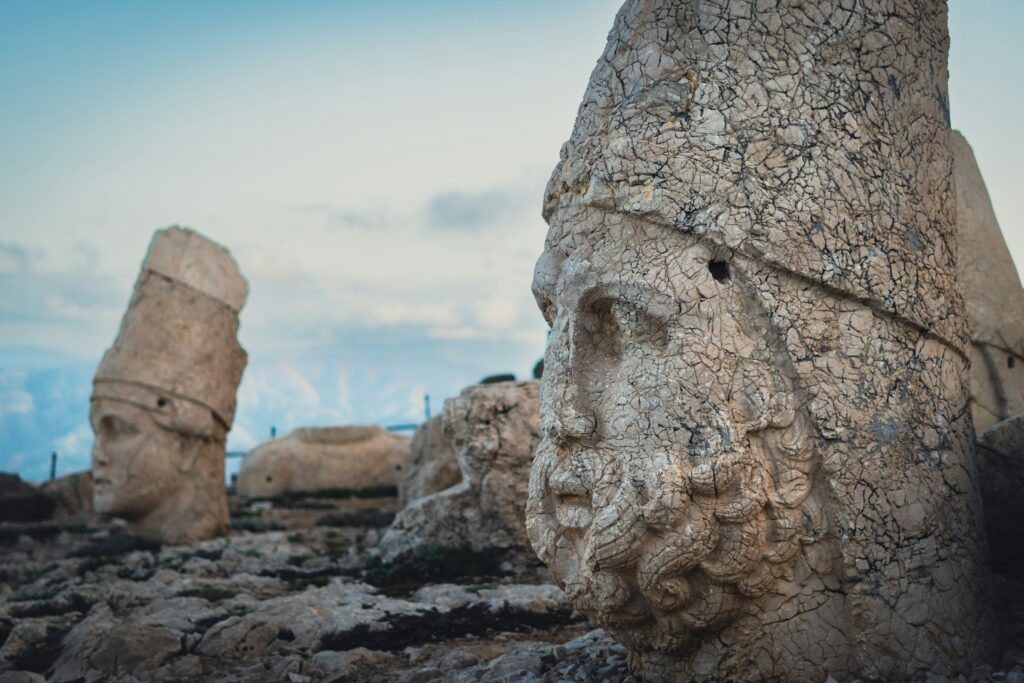
Mount Nemrut is a mountainous archaeological site located in Adıyaman Province in the Southeastern Anatolia region of Turkey. It is situated on the Taurus mountain range and is known for its large statues and tumulus from the 1st century BC. The site lies approximately 2100 meters above sea level and is part of the Nemrut Dağı National Park. Mount Nemrut is a unique destination combining historical ruins and natural geography within Turkey’s inland region.
Mount Nemrut Overview
Location: Southeastern Turkey, Adıyaman Province
Primary features: Ancient stone statues and tumulus, archaeological ruins
Time needed: 1 to 2 days for full site exploration
Best time to visit: May to October (dry and accessible)
Cost level: Low to medium, mainly entrance fees and transport
Tourism profile: Cultural tourism, historical research, hiking
Reasons Travelers Visit Mount Nemrut
Ancient archaeological significance as the tomb-sanctuary of King Antiochus I
Large stone statues representing deities and historical figures from the Commagene Kingdom
High-altitude natural environment with panoramic mountain views
Geographic location on the Taurus mountain range offering unique historical context
UNESCO World Heritage Site designation
Best Time to Visit
The best time to visit Mount Nemrut is from late spring to early autumn (May to October). During these months, the weather is generally dry and the site is fully accessible without snow or harsh conditions. Summers have warm daytime temperatures but cooler nights. Winters often have snow and can make access difficult or impossible due to road closures. Tourist crowds are moderate in summer and lower in shoulder seasons.
Season
Months
Weather Conditions
Crowd Levels
Spring
April – June
Mild, dry, occasional rain
Moderate
Summer
July – September
Warm days, cooler nights, dry
Moderate to High
Autumn
October – November
Cool, dry, chance of early snow later
Low to Moderate
Winter
December – March
Snow, cold, limited access
Low
How to Get There
Mount Nemrut is accessed primarily via the city of Adıyaman, which is the nearest major urban center. Transportation options include domestic flights to Adıyaman Airport, followed by road travel by car or bus. The site is located approximately 90 kilometers from Adıyaman city center. Road conditions are mountainous and may require caution especially outside peak weather seasons.
Nearest major city: Adıyaman
Nearest airport: Adıyaman Airport (about 1.5 hours from site by car)
Transport options: flight to Adıyaman + car or bus; private car rental preferred for direct access
Travel distance from Adıyaman: approximately 90 km (about 1.5-2 hours by road)
Getting Around
Local transport mainly by private vehicle or rental car
Walking is required on-site to explore statues and tumulus; paths can be steep and uneven
Distances between points at the site are short (within 1 km)
No public transport service directly to the summit
Top Attractions in Mount Nemrut
The Eastern Terrace Statues
A collection of large seated stone statues representing gods and King Antiochus I, part of the funerary complex. This archaeological site is classified as ruins. Average visit duration: 1 to 1.5 hours.
The Western Terrace Statues
Similar to the Eastern Terrace, this site features a set of colossal statues facing west, including gods and symbolic figures. Ruins type attraction. Average visit duration: 30 to 60 minutes.
The Main Tumulus
A large man-made mound of crushed rock covering the tomb of King Antiochus I, central to the archaeological complex. Natural and historical site. Average visit duration: 30 minutes.
Nemrut Dağı National Park
Protected area surrounding Mount Nemrut including multiple hiking trails and observation points. Classified as a natural site. Average visit duration: variable, 1 hour to half day.
Common Visitor Activities
Viewing and photographing the ancient statues and tumulus at sunrise or sunset
Hiking various trails around Mount Nemrut in Nemrut Dağı National Park
Exploring nearby archaeological and cultural sites in Adıyaman Province
Visiting Adıyaman city for regional museums and local cuisine
Suggested Mount Nemrut Visit Duration
A half day visit allows basic viewing of main statues and tumulus. A full day permits hiking and visiting additional terraces with slower pacing. Two to three days are suitable for extended hiking in the national park and visiting nearby regional sites.
Nearby Destinations
Adıyaman city – approximately 90 km, 1.5–2 hours by road
Kahta town – approximately 50 km, 1 hour by road
Perre ancient city ruins – about 10 km from Kahta
Mount Arsameia – approximately 20 km from Mount Nemrut
Practical Information
Category
Details
Climate
Continental mountainous climate; warm summers, cold winters with snow
Seasonality notes
Accessible late spring to early autumn; winter access limited by snow
Crowd levels
Moderate in summer, low shoulder seasons, very low winter
Constraints or limitations
Steep and uneven terrain; limited public transport; winter closures possible
Frequently Asked Questions
What type of travelers visit Mount Nemrut?
Travelers interested in ancient history, archaeology, hiking, and mountain landscapes visit Mount Nemrut. The site attracts cultural tourists and researchers focused on the Commagene Kingdom and historical monuments in mountainous environments.
How many days are needed to visit Mount Nemrut?
A minimum of one day is needed for key archaeological sites. Two to three days allow for hiking, visiting multiple terraces, and exploring nearby natural and cultural points in Nemrut Dağı National Park and Adıyaman Province.
Is Mount Nemrut safe to visit?
Mount Nemrut is safe for visitors during open seasons. Caution is advised for steep paths and high altitude conditions. Avoid winter visits due to snow and potential road closures. Use appropriate footwear and check local weather reports before travel.
When is the best time to visit Mount Nemrut?
The best time to visit is from May to October when the weather is dry and roads are accessible. Winter months are generally not recommended due to snow and limited site access. Spring and autumn offer milder temperatures and fewer visitors than peak summer.
Mia is a lifestyle and travel influencer from Spain. She visited Turkey to explore its diverse landscapes, from Istanbul’s rooftops to the beaches of Antalya. Mia writes about city life, cultural festivals, and scenic destinations.