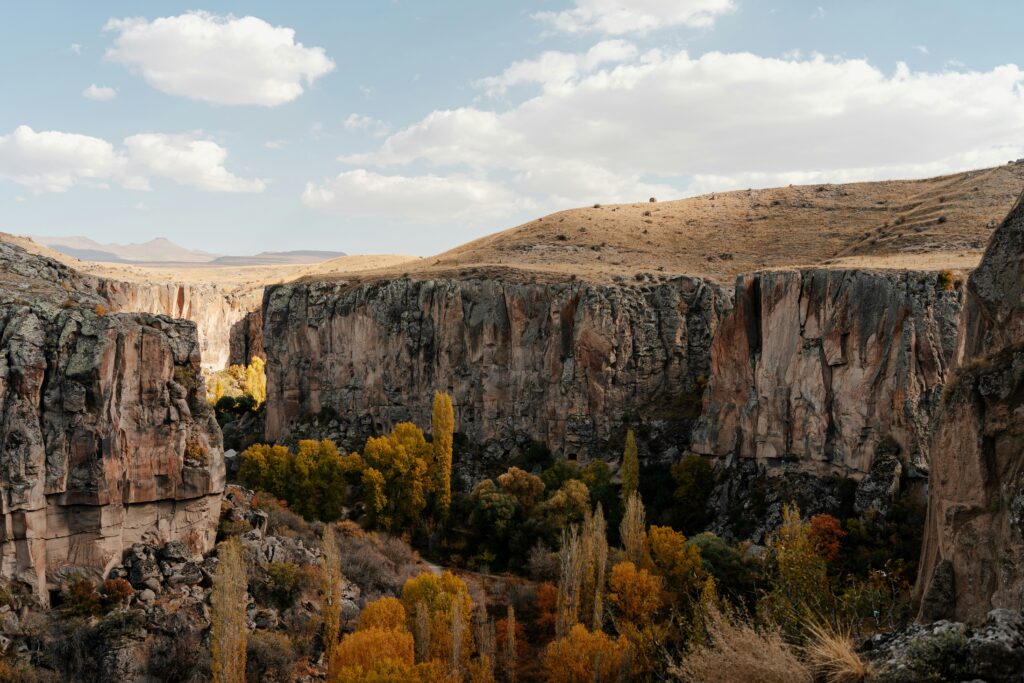
Ihlara Valley is a natural region and canyon located in Aksaray Province in the Central Anatolia region of Turkey. It is situated within the Mount Hasan volcanic area and is part of the Cappadocia historic region. The valley extends approximately 14 kilometers along the Melendiz River and is characterized by steep volcanic rock formations and Byzantine-era cave churches carved into the cliffs. Ihlara Valley is a key destination for geological, historical, and ecological tourism.
Ihlara Valley Overview
Location: Aksaray Province, Central Anatolia, Turkey
Primary features: 14 km canyon, volcanic rock formations, Byzantine cave churches
Time needed: 1–3 days depending on hiking and site visits
Best time to visit: April to October (spring to autumn), low rainfall months
Cost level: Low to medium, entry fees apply for some churches
Tourism profile: Cultural heritage, nature hiking, geological interest
Reasons Travelers Visit Ihlara Valley
Historical sites featuring Byzantine-era rock-cut churches and frescoes
Natural canyon landscape formed by volcanic activity and river erosion
Hiking opportunities along a 14 km valley trail following the Melendiz River
Location within the Cappadocia region, notable for its geological formations
Best Time to Visit
The best months to visit Ihlara Valley are from April through October, avoiding winter months when snowfall can limit accessibility. Spring and early autumn offer moderate temperatures and low precipitation levels. Summer months (June to August) are warmer but the valley remains accessible. Visitor numbers peak in summer and spring, with lower crowd levels in late autumn.
Season
Months
Weather
Crowd Levels
Spring
Apr–Jun
Mild temperatures, low rainfall
Medium to high
Summer
Jul–Aug
Hot, dry
High
Autumn
Sep–Oct
Cooling temperatures, low rainfall
Low to medium
Winter
Nov–Mar
Cold, snow likely
Low
How to Get There
Ihlara Valley is accessible via the provincial capital of Aksaray in Central Anatolia. There is no direct rail or airport service to the valley; travelers typically use a combination of road transport from nearby cities. The valley is approximately 40 kilometers from Aksaray city center. Bus and car are the primary transport options.
Nearest major city: Aksaray
Transport options: Car rental, intercity bus, local taxi
Approximate travel times: 40 minutes from Aksaray to Ihlara Valley by car
Getting Around
Main mode: Walking and hiking along valley trails
Local transport limited within valley; private car or taxi advised for transfers
Distances between main attractions in the valley range from 1 to 5 km
Trail marked and suitable for moderate hiking, varying terrain
Top Attractions in Ihlara Valley
Ihlara Canyon
One of the longest and deepest canyons in Turkey, approximately 14 km long. Natural site featuring volcanic rock walls and the Melendiz River at the canyon floor. Average visit duration: 2–3 hours for partial hiking, up to 6 hours for full traversal.
Selime Monastery
A large rock-cut monastery complex at the end of the valley featuring chapels, living quarters, and a cathedral-sized church. Historical site from the Byzantine period. Average visit duration: 1–1.5 hours.
Rock-Cut Churches of the Valley
Multiple Byzantine-era churches carved into the volcanic rock walls featuring frescoes, including the Ağaçaltı Church and Kokar Church. Cultural and historical attractions. Average visit duration: 15–30 minutes per church.
Melendiz River
A river running along the valley floor contributing to the unique ecosystem and landscape. Natural site supporting local flora and fauna. Average visit duration: integral to hiking and sightseeing.
Common Visitor Activities
Hiking along the valley trail from Ihlara Village to Selime Monastery
Exploring Byzantine rock-cut churches and frescoes within cliff faces
Photography of geological formations and natural scenery
Birdwatching and observation of local plant species
Visiting archaeological and historical museums in nearby Aksaray
Suggested Ihlara Valley Visit Duration
A half-day visit can cover selected churches and short nature walks. A one-day visit allows for hiking a significant portion of the valley and visiting Selime Monastery. Two to three days are recommended for thorough exploration of the valley, hiking, and nearby sites.
Nearby Destinations
Aksaray City – 40 km (40 minutes by car)
Cappadocia Region (Goreme) – Approx. 70 km (1.5 hours by car)
Derinkuyu Underground City – Approx. 60 km (1.5 hours by car)
Mount Hasan – Approx. 25 km (40 minutes by car)
Practical Information
Category
Information
Climate
Continental: hot dry summers, cold snowy winters
Seasonality notes
Most accessible and comfortable Apr to Oct; closures possible in winter due to snow
Crowd levels
Peaks in summer months; low in winter and late autumn
Constraints or limitations
Hiking trail uneven; not accessible for mobility-impaired persons; limited public transport options inside valley
Frequently Asked Questions
What type of travelers visit Ihlara Valley?
Ihlara Valley attracts cultural heritage travelers, hikers, nature enthusiasts, and history researchers interested in Byzantine churches and volcanic landscapes. Visitors are generally those who prefer outdoor activities and exploring historical sites.
How many days are needed to visit Ihlara Valley?
Visitors typically spend 1 to 3 days: one day to cover hiking and major sites, half a day for shorter visits, and up to three days for extensive exploration including nearby attractions. The duration depends on hiking interest and visit scope.
Is Ihlara Valley safe for tourists?
Yes, the valley is generally safe. Visitors should be prepared for uneven hiking terrain and varying weather. Basic safety precautions for outdoor activities apply. Emergency services are available in nearby towns.
What is the best time of year to visit Ihlara Valley?
The best time is from April through October when weather conditions favor hiking and outdoor visits. Winters can be cold with snow, limiting access. Spring and autumn offer moderate climate with fewer tourists.
Ava is a wellness and travel enthusiast from Australia. She explored Turkey’s thermal baths, Mediterranean coasts, and yoga retreats. Ava shares tips on relaxation, wellness, and mindful travel experiences in Turkey