Last update October 6, 2026
Giresun gave the world the cherry, and the city’s name proves it. The Romans called the town Cerasus, and that word eventually became kiraz in Turkish, cherry in English, and cerise in French, all tracing back to this stretch of the Black Sea coast. Cherries still grow here, alongside tobacco, but hazelnuts have become the real identity. Giresun ships out more hazelnuts than almost anywhere else in the world, and the hillsides around the city are blanketed in groves that supply chocolate makers across Europe.
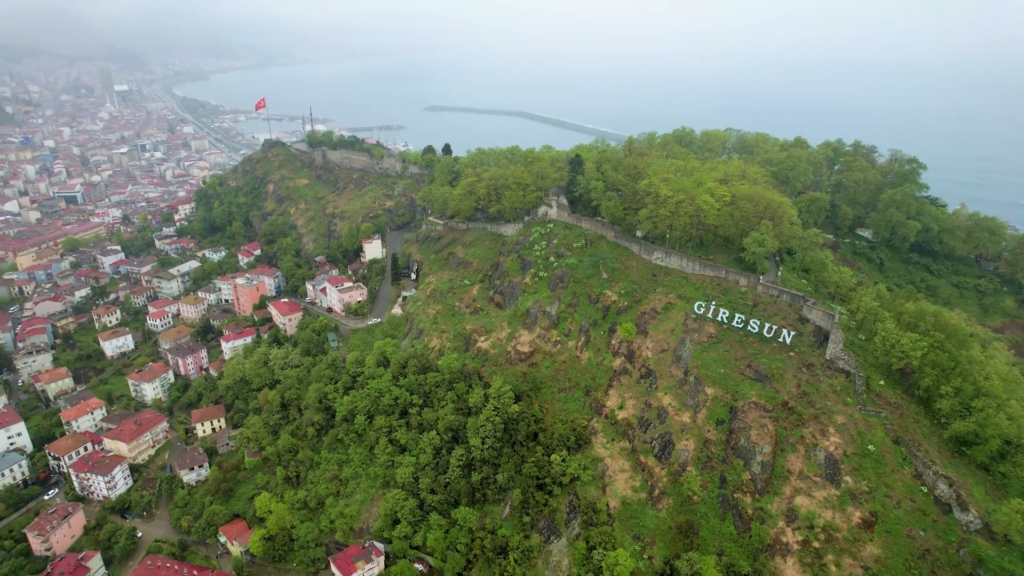
Giresun Castle sits on a hill right in the city center, built around 200 BC, and it’s where locals actually spend their afternoons: strolling the grounds, picnicking under centuries-old plane trees, drinking tea in gardens that look straight out over the Black Sea. The historic quarter clustered around it earned protected conservation status in 1981, and it’s worth a slow walk before you head back down toward the water. From the castle, Giresun Island comes into view just offshore, the only island in the eastern Black Sea, tied in legend to Jason and the Argonauts on their search for the Golden Fleece. A short boat ride from the port gets you there, and the Aksu Festival each May, held at the river mouth across from the island, is thought to date back three thousand years.
Inland, the plateaus are where Giresun really earns its reputation for scenery. Kümbet and Kulakkaya sit less than an hour from the city, and both preserve the traditional Black Sea highland lifestyle, with wooden guesthouses and markets selling local hazelnut sweets alongside honey and dairy. Giresun gets more rain than almost anywhere else in Turkey, which explains the thick green forest running from the shoreline straight up into the mountains. Try hazelnut baklava or findik ezmeli sütlü kadayıf while you’re here, and don’t skip the anchovies, cooked a dozen different ways and genuinely central to how people eat along this coast.
Giresun works well as a stop on a longer Black Sea road trip, sitting between Trabzon and Ordu with frequent bus service connecting all three. Give it a day for the castle and island, and a second if the plateaus pull you inland. It’s not a place built around a single landmark. It’s a working coastal city with real history, real hazelnuts, and a quieter pace than Turkey’s more famous coasts.
You May Also Like

PLAN YOUR JOURNEY BY DESTINATION
Get detailed travel guides for Turkiye's most popular regions, including the Mediterranean coast, Cappadocia, Istanbul and more. Each guide is packed with local insights, recommended routes and practical tips to help you explore like a local.
DETAILED MAPS
GPX files, offline maps and route notes.
DAILY ITINERARIES
Step-by-step plans to make your trip easy.
PRACTICAL INFO
Where to stay, eat, transport and more.
LOCAL INSIGHTS
Tips, hidden gems and local knowledge.