What type of travelers visit Gaziantep?
Gaziantep attracts cultural travelers, history enthusiasts, and food lovers. Visitors interested in archaeology, ancient mosaics, Ottoman history, and regional cuisine form the main traveler groups.
Last update February 13, 2026
Gaziantep is a city located in the Gaziantep Province within the Southeastern Anatolia Region of Turkey. It lies near the Syrian border in the southeastern part of the country and is known as Turkey’s sixth-largest city. Gaziantep is positioned on a plateau with an elevation around 850 meters above sea level. This city is recognized for its rich history, cultural heritage, and distinctive culinary traditions.
The optimal months to visit Gaziantep are spring (March to June) and autumn (September to November). During these periods, temperatures typically range from 15°C to 30°C, with lower humidity and minimal rainfall. Summers (July-August) can be hot, exceeding 35°C, while winters are cold with occasional snowfall. Tourist crowd levels peak in spring and autumn and are lower during summer and winter.
| Season | Months | Typical Weather | Crowd Level |
|---|---|---|---|
| Spring | Mar-Jun | 15-30°C; low rain | Moderate to High |
| Summer | Jul-Aug | 30-40°C; dry | Low to Moderate |
| Autumn | Sep-Nov | 15-28°C; low rain | Moderate |
| Winter | Dec-Feb | 0-10°C; possible snow | Low |
Gaziantep is accessible by air, road, and bus services. The nearest major city is Adana, approximately 150 kilometers west. Gaziantep has its own international airport with domestic and some international connections. The city can also be reached by intercity bus and car from major Turkish cities. There is no direct train service to Gaziantep.
A museum housing one of the world’s largest collections of Roman mosaics, including the famous Gypsy Girl mosaic. This is an archaeological museum. Average visit duration is 1.5 to 2 hours.
A historic castle dating from Roman times, with later medieval and Ottoman modifications. The site serves as a fortress and viewpoint. Average visit duration is 1 to 1.5 hours.
Traditional market area specializing in copper goods, utensils, and handicrafts. It is an open bazaar and cultural site. Average visit duration is 45 minutes to 1 hour.
A museum focused on regional culinary history and practices, featuring exhibits on local foods and recipes. Museum type is culinary/historical. Average visit duration is 1 hour.
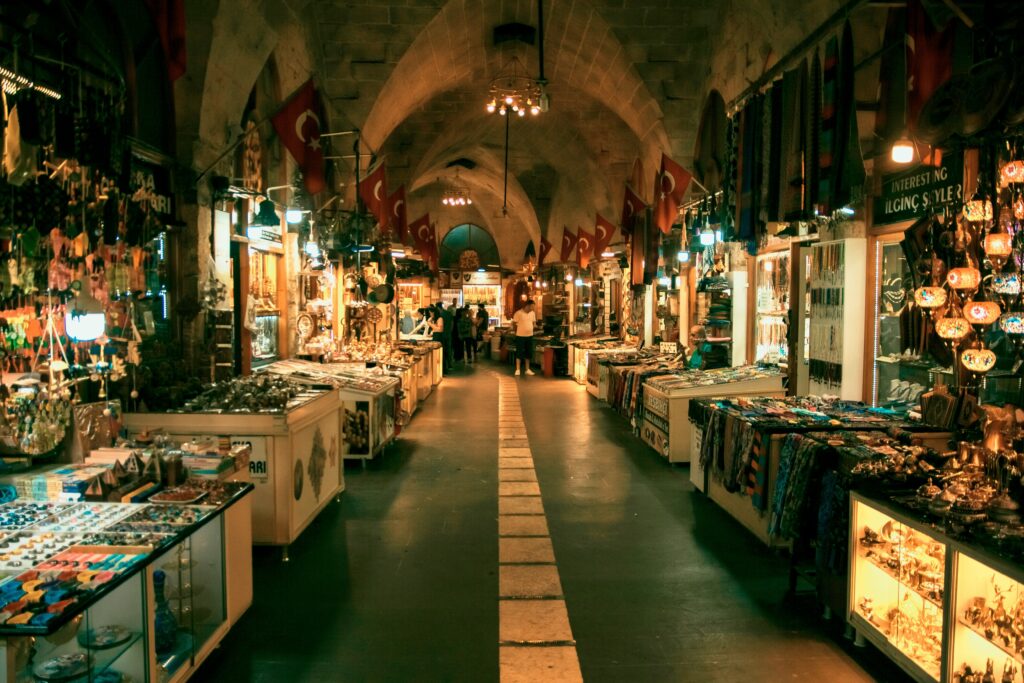
A covered Ottoman-era bazaar notable for its architecture and artisanal shops. It is a historic market. Average visit duration is 45 minutes to 1 hour.
A minimum of one full day allows visiting key attractions such as the Mosaic Museum and the Castle. Two to three days enable a more comprehensive experience including bazaars, museums, and culinary exploration. Half-day visits are possible but limit activities to a single major site or market.
| Climate | Semi-arid continental climate with hot summers and cold winters |
|---|---|
| Seasonality notes | Spring and autumn provide moderate temperatures; summer can be very hot; winter can have snowfall |
| Crowd levels | Moderate peak during spring and autumn; lower in summer and winter |
| Constraints or limitations | Limited train connectivity; some summer heat may restrict outdoor activities; possible winter transport delays due to snow |
Gaziantep attracts cultural travelers, history enthusiasts, and food lovers. Visitors interested in archaeology, ancient mosaics, Ottoman history, and regional cuisine form the main traveler groups.
One full day covers major attractions like the Zeugma Museum and Gaziantep Castle. Two to three days allow in-depth exploration of museums, bazaars, and culinary sites. Half-day visits are possible but limited.
Gaziantep is generally safe for travelers. Usual precautions apply, such as avoiding border areas and staying informed about current security advisories. Staying in central city areas is recommended.
Spring (March to June) and autumn (September to November) are the best months to visit due to moderate temperatures and lower crowd levels. Summer can be very hot, and winter may include snow and cold weather.