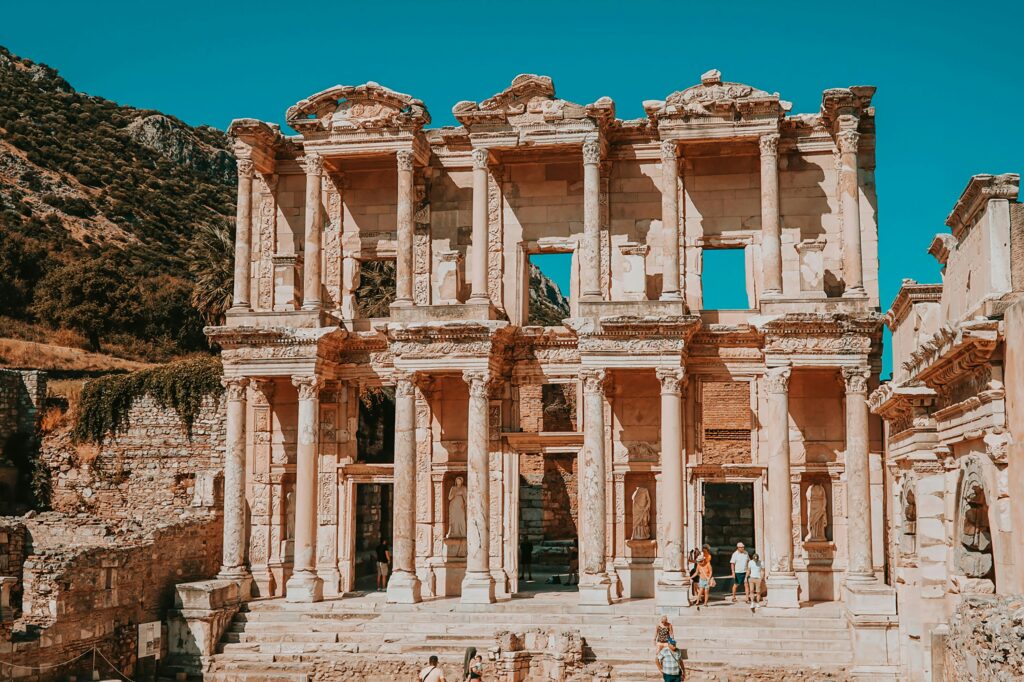
Ephesus is an ancient city and archaeological site located near Selçuk town in İzmir Province, in the Aegean Region of Turkey. It is situated along the western coast of Turkey, close to the Aegean Sea. The site is renowned for its well-preserved Greco-Roman ruins and its role in ancient history. Ephesus was once a major Mediterranean port city and religious center during antiquity.
Ephesus Overview
Location: Near Selçuk, İzmir Province, Aegean Region
Primary features: Ancient Greco-Roman ruins, Temple of Artemis, Library of Celsus
Time needed: 1-3 days based on interests
Best time to visit: April to June, September to October
Cost level: Low to medium entry fees and local costs
Tourism profile: Cultural tourism, history enthusiasts, archaeology visitors
Reasons Travelers Visit Ephesus
Significant historical site from ancient Greek and Roman periods
Presence of UNESCO World Heritage Sites such as the Temple of Artemis
Access to well-preserved ruins including the Library of Celsus and large amphitheater
Location near the Aegean coast and rich archaeological landscape
Best Time to Visit
The recommended months to visit Ephesus are spring (April to June) and autumn (September to October). During these periods, temperatures range from 15°C to 25°C. Summers (July and August) are hot with temperatures often exceeding 30°C and higher visitor density. Winters (December to February) are mild but less suitable for extensive outdoor exploration due to rain and cooler weather.
Season
Months
Temperature Range
Crowd Level
Spring
April – June
15°C – 25°C
Moderate
Summer
July – August
30°C – 35°C+
High
Autumn
September – October
18°C – 27°C
Moderate
Winter
December – February
8°C – 15°C
Low
How to Get There
Ephesus is best accessed via İzmir Adnan Menderes Airport, located approximately 50 km from the site. From there, visitors can use bus services, taxis, or car rentals. The town of Selçuk provides the closest train and bus connections. Road travel is also possible from major cities in western Turkey.
Nearest major city: İzmir (approx. 80 km northeast)
Transport options: flight to İzmir Airport, bus, car rental, train to Selçuk
Getting Around
Most archaeological sites and attractions are walkable within Selçuk and the main Ephesus ruins area
Local minibuses and taxis operate between Selçuk town and Ephesus site
Distances between main sites are generally 1-5 km, manageable on foot or by short vehicle rides
Top Attractions in Ephesus
Ephesus Ruins
Ancient city ruins from Greek and Roman periods, including streets, temples, baths, and theaters. Historical site. Average visit duration: 2-4 hours.
Library of Celsus
Roman-era ancient library facade and ruins within Ephesus archaeological site. Historical landmark. Average visit duration: 30-45 minutes.
Temple of Artemis
Ruins of one of the Seven Wonders of the Ancient World located near Ephesus site. Historical ruin with limited remains. Average visit duration: 20-30 minutes.
Ephesus Archaeological Museum
Museum in Selçuk displaying artifacts recovered from Ephesus. Museum. Average visit duration: 1-2 hours.
House of the Virgin Mary
Religious pilgrimage site near Ephesus, believed to be the last residence of Mary. Religious historic site. Average visit duration: 1 hour.
Common Visitor Activities
Walking tours of Ephesus ancient city ruins
Visiting the Temple of Artemis excavation site
Exploring the Ephesus Archaeological Museum in Selçuk
Tour to House of the Virgin Mary religious site
Day trips to nearby coastal towns such as Kusadasi
Suggested Ephesus Visit Duration
Half a day is sufficient to see the main Ephesus ruins briefly. One full day allows viewing all main sites including the museum and the House of Virgin Mary. Two to three days provide time for additional nearby visits, coastal excursions, and more detailed exploration of the archaeological areas.
Mediterranean climate with hot dry summers and mild wet winters
Seasonality notes
Peak visits occur in spring and autumn; summers are hot and more crowded
Crowd levels
High in summer months and holidays; moderate in spring and autumn; low in winter
Constraints or limitations
Summer heat can exceed 30°C; some archaeological areas have uneven terrain; limited public transport on weekends
Frequently Asked Questions
What type of travelers visit Ephesus?
Ephesus attracts mainly cultural travelers, history enthusiasts, and archaeology visitors interested in ancient Greek and Roman sites. It is also frequented by religious pilgrims visiting the House of Virgin Mary. Visitors generally seek educational and historical experiences rather than leisure or beach tourism.
How many days are needed to visit Ephesus?
One full day is typically sufficient to explore the primary archaeological sites including the ruins, Temple of Artemis, and the museum. Additional days (2-3 total) allow for nearby excursions to Selçuk town, Kusadasi, and other local landmarks for more comprehensive visits.
Is Ephesus safe for travelers?
Ephesus is generally safe for travelers with standard precautions. The site is well-maintained with official security. Visitors should remain cautious of uneven paths when walking in ruins and protect themselves from sun exposure during hot months.
What is the best time to visit Ephesus?
Spring (April to June) and autumn (September to October) offer moderate temperatures (15°C-27°C) and moderate crowd levels. These periods are best for outdoor exploration. Summers are hotter and more crowded, winters cooler and less suited for extensive walking tours.
Ava is a wellness and travel enthusiast from Australia. She explored Turkey’s thermal baths, Mediterranean coasts, and yoga retreats. Ava shares tips on relaxation, wellness, and mindful travel experiences in Turkey