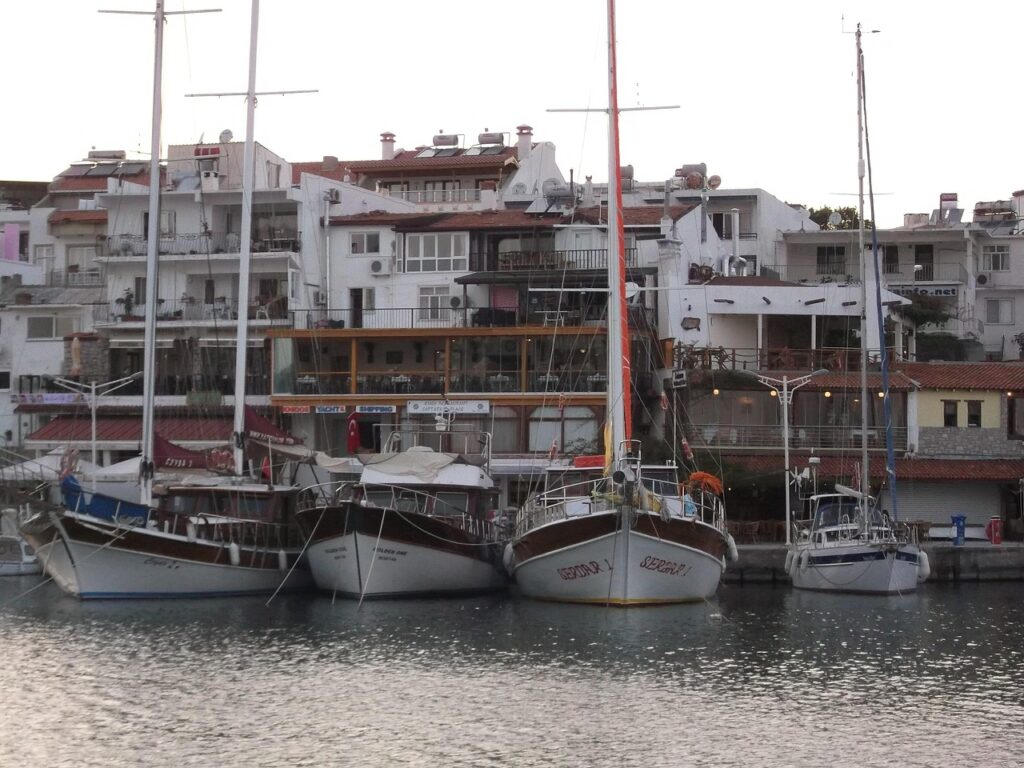
Datca is a coastal town located in Muğla Province in the Aegean region of Turkey. It lies on the Datça Peninsula, positioned between the Aegean and Mediterranean seas. The town is known for its rugged coastline, Mediterranean climate, and historical sites. Datca serves as a gateway to exploring the natural landscapes and cultural heritage of southwestern Turkey.
Datca Overview
Location: Coastal town in Muğla Province, southwestern Turkey
Primary features: Ancient ruins, pine forests, beaches, maritime landscape
Time needed: 2-3 days (minimum 1 day)
Best time to visit: April to October (dry and warm season)
Cost level: Medium compared to Turkish coastal destinations
Presence of ancient Greek and Roman ruins including Knidos archaeological site
Unspoiled natural environment with pine forests and clear sea bays
Local cuisine featuring fresh seafood and traditional Aegean dishes
Strategic location on a peninsula offering coastal and marine activities
Mild Mediterranean climate favorable for outdoor activities
Best Time to Visit
The best time to visit Datca is from April to October when the weather is warm and dry. Summer months (July and August) can be hot with temperatures often exceeding 30°C (86°F) and increased visitor numbers. Spring (April to June) and autumn (September to October) offer moderate temperatures and lower crowd density. Winter months are cooler and wetter, with limited tourism facilities operating.
Season
Months
Typical Weather
Crowd Level
Spring
April – June
Mild, dry, temperatures 15-25°C
Moderate
Summer
July – August
Hot, dry, temperatures 30-35°C
High
Autumn
September – October
Mild, dry, temperatures 18-28°C
Moderate
Winter
November – March
Cool, wetter, temperatures 8-15°C
Low
How to Get There
Datca is accessible via road from nearby major cities and airports. The closest airport with regular domestic flights is Dalaman Airport, approximately 120 km away. Road travel via bus or car is common from regional centers. There is no train or direct ferry service to Datca town. Travel times vary by origin.
Nearest major airports: Dalaman Airport (120 km) and Milas-Bodrum Airport (160 km)
Road transport: Intercity buses and rental cars available from Muğla, Marmaris, and Antalya
Boat access: Limited private and charter boats along the peninsula coast
Getting Around
Local minibuses operate between Datca town and nearby villages
Taxis available in town for short distances
Walking is common within Datca town; distances between points are short (under 2 km)
Car rentals recommended for exploring the peninsula and remote beaches
Top Attractions in Datca
Knidos Ancient City
An ancient Greek and Roman archaeological site located at the tip of the Datca Peninsula, featuring ruins of a theater, agora, and temple. It is an open-air historical site. Average visit duration is 2-3 hours.
Palamutbuku Beach
A natural sandy beach known for clear waters and lack of commercial development. The attraction is a natural site suitable for swimming and sunbathing. Average visit duration is 2-4 hours.
Datca Old Town
The historical center with traditional stone houses, narrow streets, and local markets. It is an urban cultural site. Average visit duration is 1-2 hours.
Mandarin Groves
Agricultural areas around Datca town with extensive mandarin orange cultivation. It is an agricultural landscape site. Average visit duration is 1 hour for walking or cycling tours.
Hayitbuku Bay
A natural bay offering scenic views and swimming opportunities. It is a natural coastal site. Average visit duration is 2-3 hours.
Common Visitor Activities
Exploring archaeological ruins at Knidos
Swimming and sunbathing at natural beaches such as Palamutbuku and Hayitbuku
Walking and browsing markets in Datca Old Town
Cycling or hiking in pine forests and mandarin groves
Boat trips along the Datca Peninsula coastline
Suggested Datca Visit Duration
A stay of 2 to 3 days is recommended to cover key attractions like Knidos, beaches, and the old town while allowing time for walking, swimming, and short excursions. One full day is sufficient for a brief visit to key sites. A half-day visit is feasible but limits activities to either the archaeological site or beaches.
Nearby Destinations
Marmaris – approx. 75 km by road, 1.5 hours
Datça Peninsula villages such as Palamutbuku – within 5-10 km
Halikarnassos (Bodrum) – approx. 150 km, 3 hours by car
Mugla city – approx. 120 km, 2.5 hours by road
Practical Information
Climate
Mediterranean with hot, dry summers and mild, wet winters
Seasonality notes
Peak tourism in July-August; lower season April-June and September-October
Crowd levels
High in summer months, moderate spring and autumn, low in winter
Constraints or limitations
Limited public transport; some sites accessible only by car; summer heat above 30°C; winter closures of some tourist facilities
Frequently Asked Questions
What type of travelers visit Datca?
Datca attracts travelers interested in nature tourism, history, and cultural exploration. Common profiles include outdoor enthusiasts visiting beaches and forests, history enthusiasts visiting archaeological sites, and cultural travelers exploring traditional towns. The destination suits visitors preferring moderate crowd levels and authentic regional experiences.
How many days are needed to visit Datca?
Plan for 2 to 3 days to visit major attractions including Knidos and coastal sites at a comfortable pace. One full day suffices for a brief visit, while a half-day visit restricts activities to fewer places. Duration depends on transport access and activity preferences.
Is Datca safe for travelers?
Datca is generally considered safe with low crime rates. Normal travel precautions apply including securing valuables and being cautious when swimming. Emergency services and healthcare facilities are available in town. Travelers should check local conditions seasonally.
What is the best time to visit Datca?
Best visitation months are April through October, with mild and dry weather favorable for outdoor activities. Spring and autumn offer moderate temperatures and lower crowds, while summer months are hotter and more crowded. Winter is cooler and wetter, with limited tourism services.
Liam is a travel journalist from Canada who has explored Turkey’s vibrant cities and ancient ruins. He fell in love with the bustling streets of Istanbul and the surreal landscapes of Cappadocia. Liam writes about cultural experiences and hidden gems that travelers often overlook.