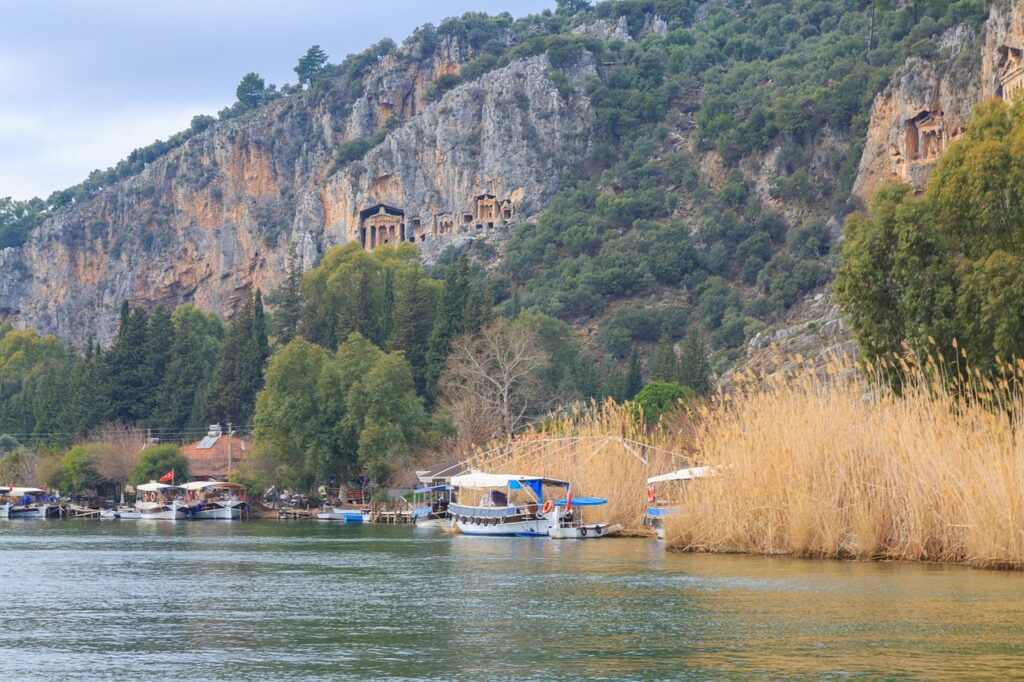
Dalyan is a small town located in Muğla Province, in the Aegean region of southwestern Turkey. It lies along the Dalyan River near the Aegean coast and is geographically situated between the Mediterranean Sea and the Taurus Mountains. Dalyan is known for its unique combination of natural wetlands, archaeological sites, and beaches. The town serves as a gateway to the Iztuzu Beach and the ancient ruins of Kaunos in the region.
Dalyan Overview
Location: Southwest Turkey, Muğla Province, Aegean region
Primary features: Dalyan River wetlands, Iztuzu Beach, ancient Kaunos ruins
Time needed: 2-3 days (minimum 1 day)
Best time to visit: April to October (dry season)
Cost level: Low to medium relative to larger Turkish cities
Tourism profile: Nature tourism, cultural heritage, beach access
Reasons Travelers Visit Dalyan
Presence of ancient ruins of Kaunos, including rock tombs and a classical city
Natural features such as the Dalyan delta wetlands and the renowned Iztuzu sea turtle beach
Local cuisine featuring Aegean regional dishes and freshwater fish specialties
Geographic location combining river, lake, and sea environments within close proximity
Best Time to Visit
The best time to visit Dalyan is during the dry season from April to October. Summers are warm and dry, suitable for beach and outdoor activities. Winters are mild but wetter, with limited beach access. Tourist crowd levels increase notably in July and August and are lower in spring and autumn.
Season
Months
Weather
Crowd Level
Spring
April – June
Warm, low rainfall
Moderate
Summer
July – September
Hot, dry
High
Autumn
October
Mild, decreasing temperatures
Low to moderate
Winter
November – March
Mild, rainy
Low
How to Get There
The nearest major city to Dalyan is Muğla, with Dalaman Airport serving as the closest airport. Transport options to Dalyan include car rental, intercity buses, and taxi services. The distance from Dalaman Airport to Dalyan is approximately 20 km and takes about 30 minutes by road.
Nearest major city: Muğla (approximately 50 km)
Nearest airport: Dalaman Airport (20 km)
Transport modes: car rental, bus, taxi
Travel times: 30 minutes from airport to town by car
Flight: Direct flights from Ankara Esenboğa Airport to Dalaman Airport, approximately 1.5 hours
Car: Around 700 km, roughly 10 hours driving
Bus: Long-distance buses available, travel time around 12-14 hours
No train services for this route
Getting Around
Local transportation includes taxis and dolmuş (shared minibuses)
The town center and many attractions are walkable within distances of 1-3 km
Boat transfers are commonly used for trips to Iztuzu Beach and river tours
Top Attractions in Dalyan
Ancient City of Kaunos
An archaeological site featuring ruins of an ancient Carian city including a theater, agora, and rock-cut tombs. Classified as a historical ruins site. Average visit duration: 2-3 hours.
Iztuzu Beach
A 4.5 km long sandy beach known as a nesting site for loggerhead sea turtles (Caretta caretta). It is a protected natural site and popular for swimming and sunbathing. Average visit duration: 3-4 hours.
Dalyan River and Delta Wetlands
Natural site consisting of riverine and wetland ecosystems. It is home to diverse flora and fauna, including bird species. Boat tours along the river are common. Average visit duration: 1-2 hours.
Sultaniye Hot Springs and Mud Baths
A natural thermal spring area near Dalyan with warm sulfuric water and mud baths believed to have therapeutic properties. Classified as a natural spa site. Average visit duration: 1-2 hours.
Common Visitor Activities
Boat trips along the Dalyan River to Iztuzu Beach and ancient ruins
Swimming and sunbathing at Iztuzu Beach
Visiting the archaeological site of Kaunos
Observing wildlife in the Dalyan delta, including birdwatching
Participating in mud baths and thermal spring sessions at Sultaniye
Suggested Dalyan Visit Duration
Visits to Dalyan typically range from one full day to three days. A half-day visit allows for a brief river or beach trip. One day can cover the main sights including Kaunos ruins and Iztuzu Beach. Two to three days accommodate additional nature activities, longer relaxation, and thermal spring visits.
Nearby Destinations
Marmaris – approximately 50 km, about 1-hour drive
Dalaman – approximately 20 km, about 30-minute drive
Fethiye – approximately 90 km, about 1.5-hour drive
Bodrum – approximately 150 km, about 2.5-hour drive
Practical Information
Category
Details
Climate
Mediterranean climate; hot dry summers, mild rainy winters
Seasonality Notes
Peak tourism is in summer months; spring and autumn less crowded
Crowd Levels
High in July-August; moderate otherwise
Constraints or Limitations
Heat can exceed 35°C in summer; some outdoor sites close or limited access in winter; public transport infrequent outside peak season
Frequently Asked Questions
What type of travelers visit Dalyan?
Dalyan attracts travelers interested in nature tourism, cultural heritage, and beach activities. Visitors include wildlife observers, history enthusiasts visiting ancient ruins, and beachgoers using Iztuzu Beach. The town suits small groups, families, and eco-tourists.
How many days are needed to explore Dalyan?
At least one full day is needed to visit primary attractions such as Kaunos ruins and Iztuzu Beach. Two to three days allow for additional activities including river tours, mud baths, and nature observation.
Is Dalyan safe for tourists?
Dalyan is generally safe with low crime rates. Basic precautions include protecting personal belongings and avoiding isolated areas at night. Public health and safety standards are similar to other small Turkish towns.
What is the best time to visit Dalyan for sightseeing and beach activities?
The best time is from April to October. April to June and September to October have moderate temperatures and fewer crowds, while July and August are hot with high visitor numbers suitable for beach activities but less comfortable for extensive sightseeing.
Mia is a lifestyle and travel influencer from Spain. She visited Turkey to explore its diverse landscapes, from Istanbul’s rooftops to the beaches of Antalya. Mia writes about city life, cultural festivals, and scenic destinations.