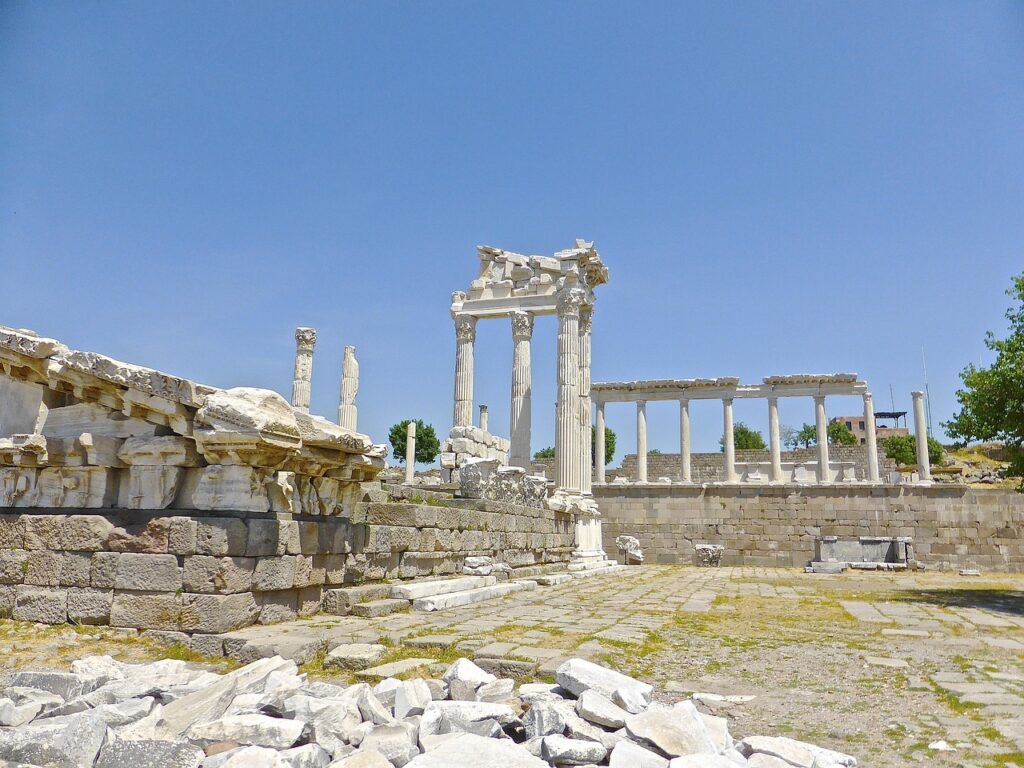
Bergama is a town located in the İzmir Province within the Aegean Region of Turkey. It is situated in western Anatolia near the Aegean coast. Known for its ancient ruins and historical significance, Bergama lies approximately 100 kilometers north of İzmir and serves as a key cultural and archaeological site. The town offers a mix of natural landscapes and examples of ancient architecture.
Bergama Overview
Location: Northwest of İzmir, Aegean Region
Primary features: Ancient ruins of Pergamon, Ottoman era architecture, natural surroundings
Time needed: 1-3 days
Best time to visit: April to June; September to October
Cost level: Low to medium compared to major Turkish cities
Tourism profile: Cultural tourism, archaeology, historical sightseeing
Reasons Travelers Visit Bergama
Ancient historical significance as city of Pergamon with well-preserved ruins including Acropolis and Asklepion
Presence of archaeological sites dating from Hellenistic, Roman, and Ottoman periods
Natural features such as surrounding hills and the Kestel Dam reservoir
Geographic location near the Aegean coast and İzmir urban center
Traditional Turkish and Aegean regional cuisine available locally
Best Time to Visit
The best visiting months for Bergama are in spring (April to June) and autumn (September to October). During these periods, temperatures average between 15°C and 25°C with lower rainfall compared to winter. Summers can be hot, reaching up to 35°C, while winters are mild and wetter. Tourist crowds are moderate in spring and autumn and increase slightly in summer.
Season
Months
Temperature
Rainfall
Crowds
Spring
Apr – Jun
15°C – 25°C
Low to moderate
Moderate
Summer
Jul – Aug
25°C – 35°C
Low
Moderate to high
Autumn
Sep – Oct
18°C – 26°C
Low
Moderate
Winter
Nov – Mar
5°C – 15°C
Moderate to high
Low
How to Get There
Bergama is accessible from several major cities in Turkey by road and bus services. The nearest major city with an airport is İzmir, approximately 100 kilometers south. There is no direct train or ferry service to Bergama. Travel times vary depending on the mode and origin city.
Nearest airport: İzmir Adnan Menderes Airport (ADB)
Accessible by intercity bus and car
Road travel is common as rail connections do not extend to Bergama directly
Getting Around
Local transportation includes taxis and minibusses operating in and around Bergama
The town center is walkable with most major sites within 2 to 3 kilometers of each other
Distances between major archaeological sites and town center range from 1 to 5 kilometers
Car rental is an option for visiting remote locations outside the town
Top Attractions in Bergama
Acropolis of Pergamon
A historically significant ancient city site with well-preserved Hellenistic and Roman ruins including temples, theater, and altar remains. The site is a major archaeological attraction. Average visit duration is 2 to 3 hours.
Asklepion
Ancient medical center and healing sanctuary dating from Hellenistic and Roman periods. It includes temples, theaters, and hospital ruins. Average visit duration is 1.5 to 2 hours.
Bergama Museum
Museum exhibiting artifacts from Pergamon and the surrounding region. Displays include sculpture, pottery, and coins. Average visit duration is 1 hour.
Red Basilica (Kızıl Avlu)
Ruins of a large Roman temple complex located in Bergama town. A notable architectural site from the Roman era. Average visit duration is 30 to 45 minutes.
Common Visitor Activities
Exploring ancient ruins and archeological sites such as the Acropolis and Asklepion
Visiting Bergama Museum to view historical artifacts
Walking tours through the historic town center and Ottoman-era streets
Photography of historical and natural landscapes
Tasting local Aegean cuisine in Bergama restaurants
Suggested Bergama Visit Duration
A half-day visit can cover the Bergama Museum and Red Basilica. One full day allows exploration of the Acropolis and Asklepion sites in addition to the museum. Two to three days enable a more relaxed pace with time for walking tours, additional local sites, and cultural activities.
Nearby Destinations
İzmir – approximately 100 km / 1.5 to 2 hours by car or bus
Çeşme – approximately 130 km / 2 to 2.5 hours by car
Ayvalık – approximately 85 km / 1.5 hours by car
Manisa – approximately 110 km / 1.5 to 2 hours by car
Practical Information
Climate
Mediterranean climate with hot dry summers and mild wet winters
Seasonality notes
Peak tourist visits from late spring to early autumn; less crowded in winter
Crowd levels
Moderate during spring and autumn; higher in summer; low in winter
Constraints or limitations
Limited public transportation within town; no direct train or flight connections to Bergama; summer can be hot
Frequently Asked Questions
What type of travelers visit Bergama?
Bergama primarily attracts cultural and historical tourists interested in ancient ruins and archaeology. Visitors also include regional travelers from nearby urban centers and those interested in Aegean cuisine and rural landscapes. It is suitable for individuals and groups focused on cultural, historical, and nature-related sightseeing.
How many days are needed to visit Bergama?
1 to 3 days are sufficient depending on interest. Minimum one full day covers main archaeological sites and museum. Two to three days allow for a more detailed visit including local streets and nearby nature areas. Half-day stays are possible but limited in scope.
Is Bergama safe for travelers?
Bergama is considered safe with low rates of crime. Visitors should observe standard precautions such as safeguarding belongings and avoiding isolated areas at night. There are no significant safety concerns reported in tourist areas or the town center.
What is the best time of year to visit Bergama?
The recommended visiting seasons are spring (April to June) and autumn (September to October) due to moderate temperatures and lower rainfall. Summer is hotter and busier, while winter is wetter and less crowded but still accessible.
Oliver is a journalist from New Zealand with a passion for local communities. He traveled through rural Turkey, learning about local crafts, traditions, and family-run businesses. Oliver highlights authentic cultural encounters and local storytelling.