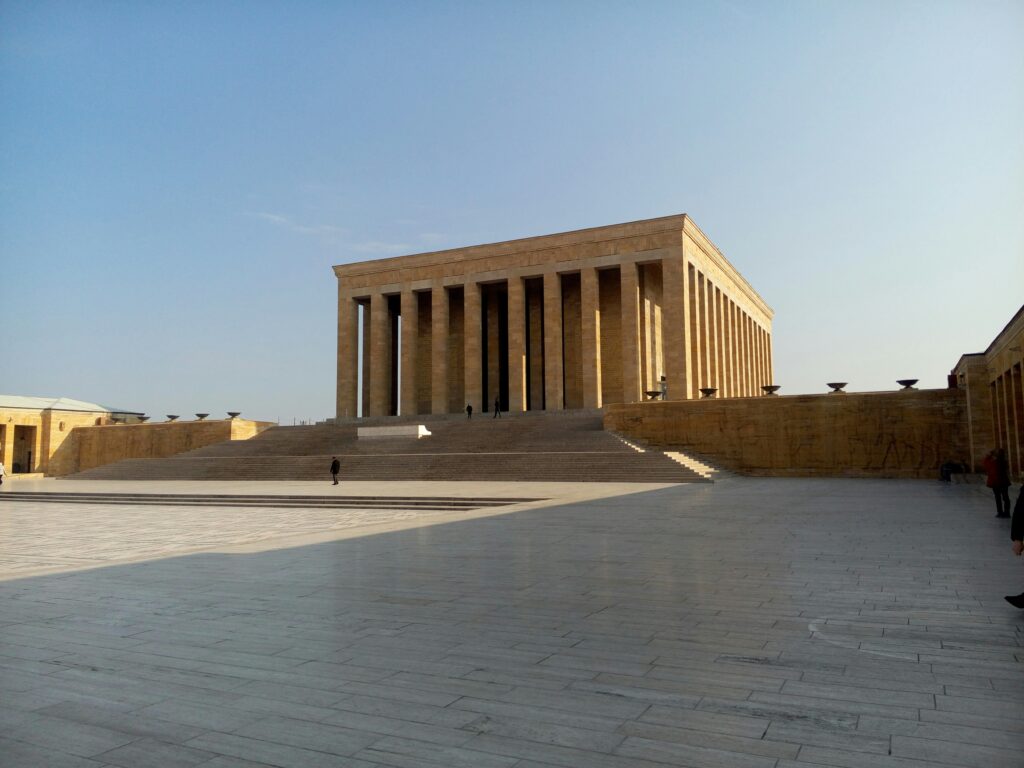
Ankara is the capital city of Turkey, classified as a metropolitan city within Ankara Province in the Central Anatolia region. It is located in the interior of Turkey, approximately in the middle of the country’s landmass. As a major urban center, Ankara holds administrative and political importance and is situated at an elevation of about 900 meters above sea level, characterized by a continental climate.
Ankara Overview
Location: Central Anatolia, approximately 450 km east of Istanbul
Primary features: Modern Turkish capital, government buildings, Anatolian history
Time needed: 2-3 days (1 day minimum)
Best time to visit: April-June (spring), September-October (fall)
Cost level: Moderate compared to Istanbul or coastal tourist cities
Tourism profile: Cultural tourism, historical sites, urban exploration
Reasons Travelers Visit Ankara
Capital city with political and administrative institutions
Rich historical sites including Roman, Byzantine, and Ottoman remains
Location of major museums such as the Museum of Anatolian Civilizations
Central geographic position providing access to Central Anatolia
Distinct continental climate with hot summers and cold winters
Turkish cuisine featuring regional Central Anatolian specialties
Best Time to Visit
The most suitable visiting periods for Ankara are spring (April to June) and fall (September to October). During these months, average temperatures range from 15°C to 25°C with low precipitation levels. Summers (July and August) are hot and dry with temperatures often exceeding 30°C, while winters (December to February) are cold, sometimes dropping below freezing with occasional snowfall. Tourist crowd levels are moderate during spring and fall, low in winter, and moderate to high in summer.
Season
Months
Temperature Range (°C)
Precipitation
Crowd Levels
Spring
Apr – Jun
15 – 25
Low
Moderate
Summer
Jul – Aug
25 – 35
Very Low
Moderate to High
Fall
Sep – Oct
15 – 25
Low
Moderate
Winter
Nov – Mar
-5 – 10
Moderate (snow possible)
Low
How to Get There
Ankara is accessible via various transportation methods. It has a major international airport, rail connections, and is reachable by bus and car from surrounding cities and regions.
Nearest major city: Istanbul (approximately 450 km west)
Transport options include flights, intercity buses, trains, and road travel by car
Travel times vary depending on origin and mode of transport
From Istanbul
Flight: 1 hour direct flights to Ankara Esenboğa Airport
Car: Approximately 6-7 hours via O-4/E80 motorway (410-450 km)
Bus: 6-8 hours on intercity buses departing from Istanbul Esenler Bus Terminal
Train: High-speed and conventional trains available, 4.5 to 6 hours travel time
Ferry: Not applicable, no direct ferry connections
Flight: Direct flights available taking about 1 hour
Car: Approximate 6.5-7.5 hours driving (540 km) via D650 and O-21 highways
Bus: 10-12 hours by intercity bus
Train: No direct railway, requires multiple transfers
Ferry: Not applicable
Getting Around
Public transport includes city buses and an expanding metro network
Taxi services are widely available throughout the city
Walking is feasible in central districts; distances between main venues range from 1 to 3 kilometers
Car rentals available for travel to outskirts and nearby destinations
Top Attractions in Ankara
Anıtkabir
Anıtkabir is the mausoleum of Mustafa Kemal Atatürk, founder of the Republic of Turkey. It is a monumental structure and museum. It is classified as a historical monument and a national symbol. Changing of the Guard ceremony is a highlight for photographers. Free to enter. Average visit duration: 1.5 to 2 hours.
Museum of Anatolian Civilizations
This museum displays artifacts from various Anatolian cultures including Hittite, Phrygian, Urartian, and Roman periods. It is classified as a museum for historical and archaeological collections. It is often ranked as one of the best museums in the world, not just Turkey. Average visit duration: 2 hours.
Ankara Castle (Hisar)**
Ankara Castle is an ancient fortress located on a hill overlooking the city center, with origins dating back to Roman and Byzantine periods. Classified as historical ruins and fortification. Average visit duration: 1 to 1.5 hours.
Kocatepe Mosque
Kocatepe Mosque is one of the largest mosques in Turkey, built in a classical Ottoman style. It is classified as a religious building and architectural landmark. Average visit duration: 30 minutes to 1 hour.
Atatürk Forest Farm and Zoo (Atatürk Orman Çiftliği)
A large recreational area featuring a zoo, agricultural farm, restaurants, and green spaces. It is classified as a natural site with recreational facilities. Average visit duration: 2 to 3 hours.
Common Visitor Activities
Visiting government and historical sites such as Anıtkabir and Ankara Castle
Touring museums including the Museum of Anatolian Civilizations
Exploring local markets and shopping districts in Ulus and Kızılay neighborhoods
Dining on regional cuisine at local restaurants featuring Turkish dishes
Relaxing and walking in public parks and the Atatürk Forest Farm
Using the city’s metro system for urban exploration
Suggested Ankara Visit Duration
A minimum visit of one full day is required to see major attractions such as Anıtkabir and the Museum of Anatolian Civilizations. Two to three days allow for exploring additional museums, cultural activities, and nearby markets. Half-day visits are possible but limited to one or two key sites.
Nearby Destinations
Hattusa – Approx. 195 km northeast; ancient Hittite capital ruins
Ayaş – Approx. 45 km west; known for thermal springs
Beypazarı – Approx. 100 km west; historic town with Ottoman-era houses
Kızılcahamam – Approx. 80 km north; thermal spa resorts and natural parks
Practical Information
Category
Details
Climate
Continental with hot dry summers and cold winters, snowfall possible
Seasonality notes
Best to visit in spring and fall for moderate weather and lower crowds
Crowd levels
Moderate in spring/fall; low in winter; moderate to high in summer
Constraints or limitations
Cold winters may limit outdoor activities; some governmental offices may be closed on national holidays; limited ferry or marine transport options
Frequently Asked Questions
What type of travelers visit Ankara?
Ankara attracts cultural tourists, history enthusiasts, and those interested in political and administrative centers. Visitors include urban explorers and travelers seeking museums and historical sites. It is also visited for regional cuisine and as a transit point within Turkey.
How many days are needed to visit Ankara?
One full day covers major sites like Anıtkabir and the Museum of Anatolian Civilizations. Two to three days enable a more thorough visit including additional museums, markets, and parks. Half-day visits are possible but limited to a few landmarks.
Is Ankara safe for travelers?
Ankara is generally a safe city with normal urban precautions advised. Visitors should be aware of traffic conditions and keep personal belongings secure in crowded areas. Standard safety measures suffice for most visitors.
What is the best time to visit Ankara?
Optimal visiting months are April to June and September to October when temperatures range between 15°C and 25°C, and precipitation is minimal. These periods offer moderate crowd levels and comfortable weather for sightseeing.
Written by Ava Thompson
Ava is a wellness and travel enthusiast from Australia. She explored Turkey’s thermal baths, Mediterranean coasts, and yoga retreats. Ava shares tips on relaxation, wellness, and mindful travel experiences in Turkey