
Last update September 24, 2026
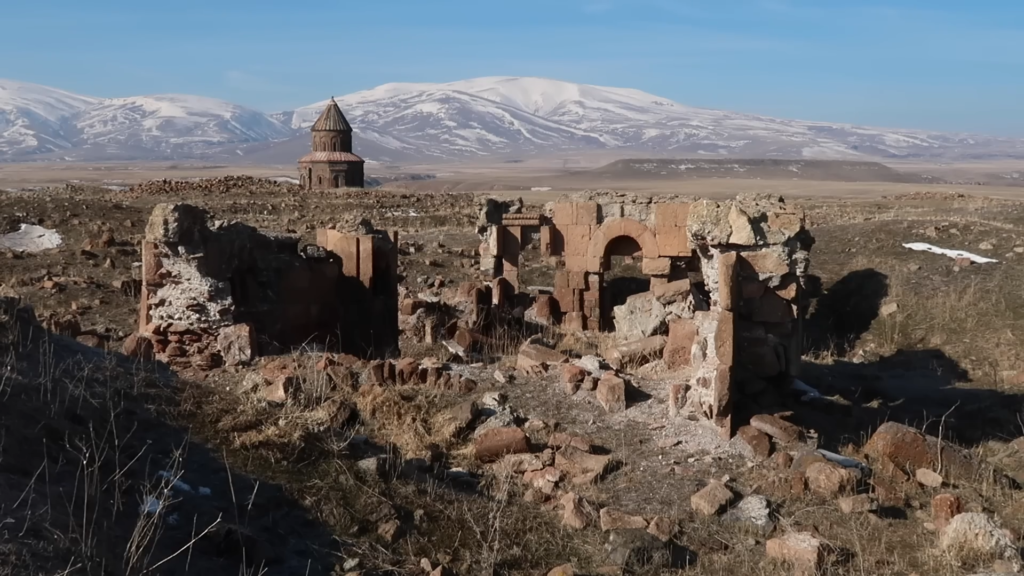
The city of Ani is situated directly on the frontier with Armenia and nowadays consists of a medieval settlement spread out over a windy plateau which once had a population comparable to that of Constantinople. It was established by the Armenian Bagratid dynasty, became a significant trading centre on the Silk Road, and then over the centuries was abandoned due to earthquakes, invasions and changes in the trade routes. The only remains existing today are stones scattered across an open area—specifically, ruined churches, a destroyed cathedral and the city walls extending over the grassland—all of which lie above a deep gully that forms the border.
To get there, one should base themselves in Kars, which is approximately 45 minutes’ drive or a organized tour away. The site is large and largely unshaded, so it is necessary to arrange for a few hours’ walking and to bring water, particularly in summer since the plateau provides little protection from the sun. Although few of the buildings have their roofs remaining, the Cathedral of Ani, which was constructed in 1001, still retains enough of its original shape to illustrate the enormous size it once had, and the Church of the Redeemer, which has been partly collapsed following a lightning strike that split it down the middle, is one of the more impressive ruins at the site.
Carefully go towards the edge of the gorge. Below, the Akhurian River cuts a steep canyon and thus forms the real border with Armenia, and on the Turkish side you can see watchtowers and fencing, which serve to remind you of how near and how delicate that boundary still is. It is a strange sensation to be standing among churches that are thousands of years old while a modern border lies only a few metres away and has been closed and closely monitored since the early twentieth century.
Few people visit Ani when compared with Turkey’s more well-known sites, and that is one of the reasons why the trip is worthwhile. While you’ll probably stroll over most of the ruins with only the wind and a small number of other tourists for company. Combined with a visit to Kars itself, famous for its architecture from the Russian era and its food with a strong Caucasian influence, you end up with one of the less visited but satisfying areas of eastern Turkey.

PLAN YOUR JOURNEY BY DESTINATION
Get detailed travel guides for Turkiye's most popular regions, including the Mediterranean coast, Cappadocia, Istanbul and more. Each guide is packed with local insights, recommended routes and practical tips to help you explore like a local.
DETAILED MAPS
GPX files, offline maps and route notes.
DAILY ITINERARIES
Step-by-step plans to make your trip easy.
PRACTICAL INFO
Where to stay, eat, transport and more.
LOCAL INSIGHTS
Tips, hidden gems and local knowledge.