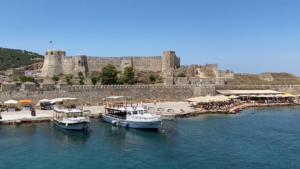
Knidos is a coastal town located in Muğla Province, in the Aegean region of southwestern Turkey. It is situated near the tip of the Datça Peninsula, overlooking the Aegean Sea. Known for its ancient ruins and maritime history, Knidos occupies a strategic position between the Aegean and Mediterranean seas. The town and its archaeological sites are part of a largely rural and natural coastal setting in the southwestern part of the country.
Knidos Overview
Location: Coastal town on the Datça Peninsula, Muğla Province, Aegean region
Primary features: Ancient Greek ruins, coastal nature, Aegean sea views
Time needed: 1-2 days for archaeological site and nearby exploration
Best time to visit: April to October (dry, warm weather)
Cost level: Low to medium compared to coastal Turkish resorts
Tourism profile: Archaeological tourism, nature appreciation, cultural history
Reasons Travelers Visit Knidos
Historic significance as an ancient Greek city with well-preserved ruins
Coastal location featuring natural harbors and Aegean Sea views
Archaeological remains including theaters, temples, and agora
Proximity to natural features such as nearby beaches and peninsular landscapes
Opportunity to explore a largely unspoiled rural coastal environment
Best Time to Visit
The best time to visit Knidos is during the spring to early autumn months, from April to October. During this period, the weather is typically warm to hot and dry, with temperatures ranging from 18°C in spring to over 30°C in peak summer. Summer months of July and August are the hottest and may experience occasional higher visitor counts, whereas spring and autumn offer milder temperatures and fewer crowds.
Season
Months
Typical Weather
Crowd Levels
Spring
April – June
Mild, 18°C-25°C, dry
Low to moderate
Summer
July – August
Hot, 28°C-35°C, dry
Moderate to high
Autumn
September – October
Mild, 20°C-28°C, dry
Low to moderate
Winter
November – March
Cool, 10°C-15°C, occasional rain
Low
How to Get There
Knidos is accessible primarily via road from nearby cities, with the closest major city being Muğla. There are no direct flights to Knidos; travelers typically use nearby airports and complete their journey by car or bus. The coastal location requires some driving on rural roads to reach the archaeological site and town area.
Nearest major city: Muğla (approximately 130 km away)
Flight to Dalaman or Milas-Bodrum airports (approx. 1.5 hours)
Car drive from airport to Knidos: 2.5-3.5 hours
Long-distance bus to Muğla (approx. 11-12 hours), then local transport or car to Knidos
Getting Around
Walkability is moderate within the archaeological site and small town area
Local transportation options are limited; private car or taxi preferred for wider area
Distances between major points: archaeological site concentrated, town facilities are within a few kilometers
Rural roads connect Knidos to nearby villages and coastline
Top Attractions in Knidos
Knidos Ancient City Ruins
The principal attraction consists of extensive ancient Greek ruins including a theater, temples, city walls, and an agora. These ruins represent the city-state of Knidos, active from 4th century BCE. The site is classified as an archaeological site. Average visit duration is 2-3 hours.
Knidos Museum
A small open-air museum near the ruins exhibiting artifacts recovered from the site, including statues, inscriptions, and pottery. The museum provides historical context and is classified as a cultural heritage museum. Average visit duration is 30-45 minutes.
Mandraki Beach
A nearby natural site on the coast, this beach is used for swimming and relaxation. It provides scenic views of the Aegean Sea and the ruins across the water. Average visit duration varies from 1-2 hours.
Common Visitor Activities
Exploring the archaeological ruins of Knidos including temples and theater
Visiting the local museum showcasing site artifacts
Hiking along coastal trails of the Datça Peninsula
Beach activities and swimming at Mandraki Beach and nearby coves
Photography of Aegean coastal landscapes and historic ruins
Suggested Knidos Visit Duration
A visit to Knidos can be structured in half a day to two days. Half-day visits cover the main archaeological ruins and the museum. One full day allows for additional time at nearby beaches and hiking trails. Two to three days provide a comprehensive experience including exploration of the wider coastal region and additional natural sites.
Nearby Destinations
Datça town – approximately 40 kilometers northeast
Marmaris – approximately 100 kilometers east via road
Bozburun Peninsula – approximately 70 kilometers northeast
Knidos is close to the coastal border of the Aegean and Mediterranean seas
Practical Information
Category
Details
Climate
Mediterranean climate with hot dry summers and mild wet winters
Seasonality notes
Peak tourism from June to September; limited visitors in winter; some seasonal closures possible
Crowd levels
Low to moderate crowds outside July-August; higher crowds during summer months
Constraints or limitations
Limited public transport; rural road access; summer heat can exceed 30°C; archaeological site uneven terrain
Frequently Asked Questions
What type of travelers visit Knidos?
Travelers who visit Knidos typically include: • History and archaeology enthusiasts interested in ancient Greek ruins • Nature and coastal environment visitors • Cultural travelers seeking less-developed locations with historic significance
How many days are needed to explore Knidos?
Visiting Knidos requires between half a day to two days depending on interests: • Half a day for the main archaeological site and museum • One to two days for additional coastal exploration and hiking
Is Knidos safe for travelers?
Knidos is generally safe for travelers with: • Low levels of crime reported • Rural and coastal environment requiring basic travel precautions • Access to local emergency services via nearby towns
What is the best time to visit Knidos?
The best time to visit is April through October when: • Weather is warm and dry • Visitor crowds are moderate except peak summer months • Outdoor activities and site exploration are comfortable
Get detailed travel guides for Turkiye's most popular regions, including the Mediterranean coast, Cappadocia, Istanbul and more. Each guide is packed with local insights, recommended routes and practical tips to help you explore like a local.